 Questions? [email protected]
Stop selling your hours.
Turn Your Expertise Into a Product.Run it inside your firm or sell it as software. It is the same build.My 288 page book on getting a product built when you are the expert and not the engineer. EPUB and PDF, sent to your email. $5.
- 01See why selling hours caps you, and what a product changes.
- 02Get the frameworks and the options, so you know what you need before you pay anyone to build it.
- 03Learn what a build costs, how to read a quote, and where AI helps and where it does not.
You are the best in your field, so every job still runs through you. Good people are hard to find, and the ones you find do not know what you know.
Tech looks broad and vague from the outside. You already know more of it than you think.
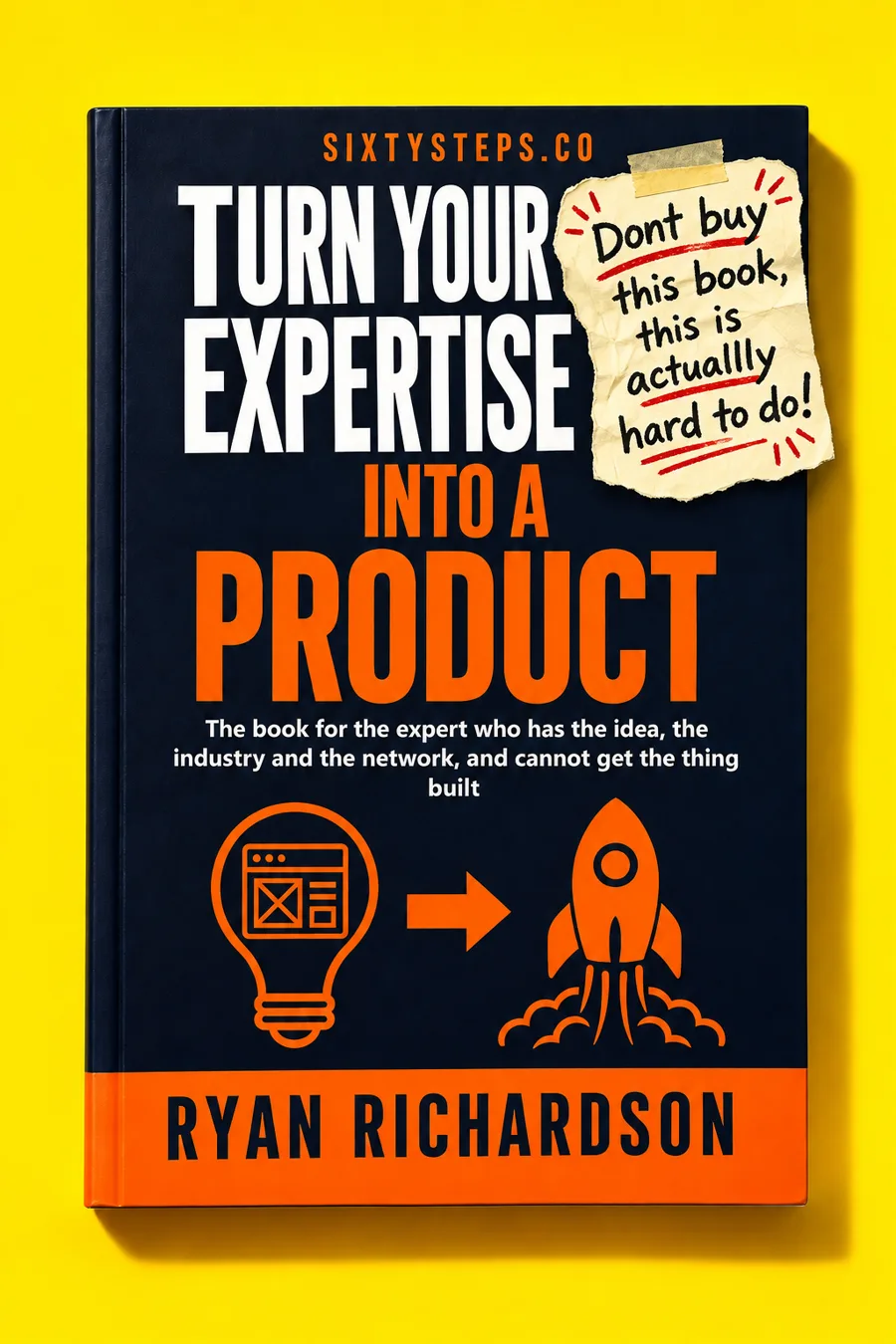
I turn what your firm knows into a product. Run it inside the firm to deliver more, or sell it as software. It is the same build.
A client booked an hour with me. I fixed their problem in five minutes.
They came in with a full project already on paper. A discovery phase, workshops, a steering group and a report.
While they described the problem I could see where it broke. It was one field, set years earlier by a person who had since left. We changed it while they watched, tested it, and we were done in about five minutes.
The client was delighted and told other people. There was no money in it. My analytics business was worse off at the end of the meeting than at the start.
It kept happening. A client would come in expecting a three month program with fifty workshops, and need a five minute fix. We sold hours, and the value was in what we knew.
If you are a senior specialist, you are in the same trap. Every job runs through you because the method lives in your head. Good people are hard to find, and the ones you find do not know what you know. So you work the hours yourself, and when you stop, the income stops.
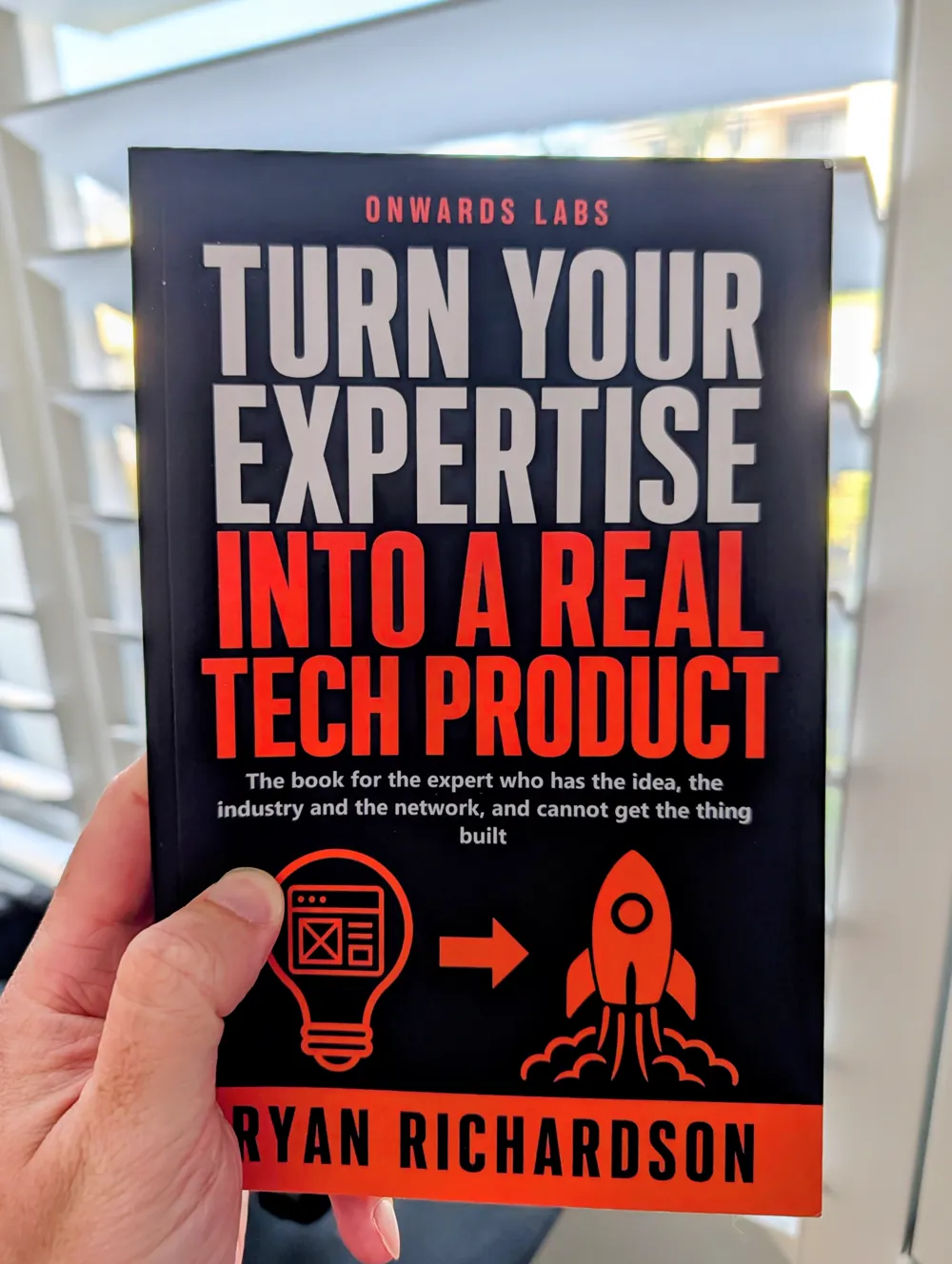
The way out is in a book. It is called Turn Your Expertise Into a Product. It is $5 and 288 pages, and you have sixty days to ask for the $5 back. Here is what is in it for you, with the numbers as the book prints them.
Chapter two has a team I ran. It took a process that delivered two or three fixes a year at high cost, and rebuilt it to deliver seventy fixes at a fifth of the cost. Output went up thirty times and cost came down eighty percent.
The response was a question about why one of the seventy took three hours when it should have taken one. The client could not see the code or judge how it was built. They saw hours, and a person at a desk.
The book calls that a pricing structure. When you are paid for hours, the better you get at solving problems quickly, the less you earn per problem. A product breaks that link. It is priced on what it is worth to the person using it, whatever hours went into making it.
Chapter nine has an operations lead who needed a tool built. He was a good leader, so he documented everything, down to ideas for how it might work. The technical team built all of it.
What he wanted, and never said because it felt too obvious, was a light tool he could update every few weeks as site processes changed. The conversation that would have caught it took thirty minutes. Once someone asked, the scope dropped by ninety percent, and the solution that had been six months in progress was rebuilt in a day.
You are trying to hand over twenty years of late nights in a few meetings. Nobody understands every detail of what you do after that, and I will not claim to. So I build in small pieces. Each piece is expected to change. It points in the right direction, you use it on real work, you say what is off, and it is fixed the next day.
That replaces the big sum, the six month wait and the tool that does not fit.
Everyone is selling an AI version of what you do. It is impressive until the work gets specific. The book calls AI estimation at scale. It does badly at anything that needs real judgement or institutional context, and you are paid for exactly that.
I build with AI every day. The way I run it, AI does the middle of the job and a person who knows the work owns both ends. Your method goes in first, and you check what comes out.
Chapter fourteen is a system we built for our own support contracts, to take an email with an issue through to a resolution.
The first pass automated the easy part and left the hard part, the diagnosis, untouched. The second pass pasted diagnostic output into ChatGPT. It found the issue, but it was slow and could not scale. So we stopped and looked at what the team spent its time on. Mostly it was the work around the diagnosis, such as file versioning, storage management, change logs and documentation.
We automated that work and left the diagnosis with the people. After a few weeks of testing we had an end to end system that handles ninety percent of complex support work. The book is plain that making it production ready still means more security, more error handling and more edge case coverage.
You keep the judgement, and the work around it stops eating your week.
Chapter six has a domain expert with a twenty year enterprise career who wanted to turn that career into a product. The hard part was the judgement he makes in a second, without noticing, because he has made it ten thousand times.
Writing down what he knew would have produced a manual, and nobody reads the manual. We built his judgement into the software, so the easy path through it is also the correct one, and a novice reaches a fraction of his answer in minutes.
I could build the software. I could not have supplied the twenty years. Nobody could, except him. That is the answer to not being able to hire another you. Your judgement goes into the system your people work in.
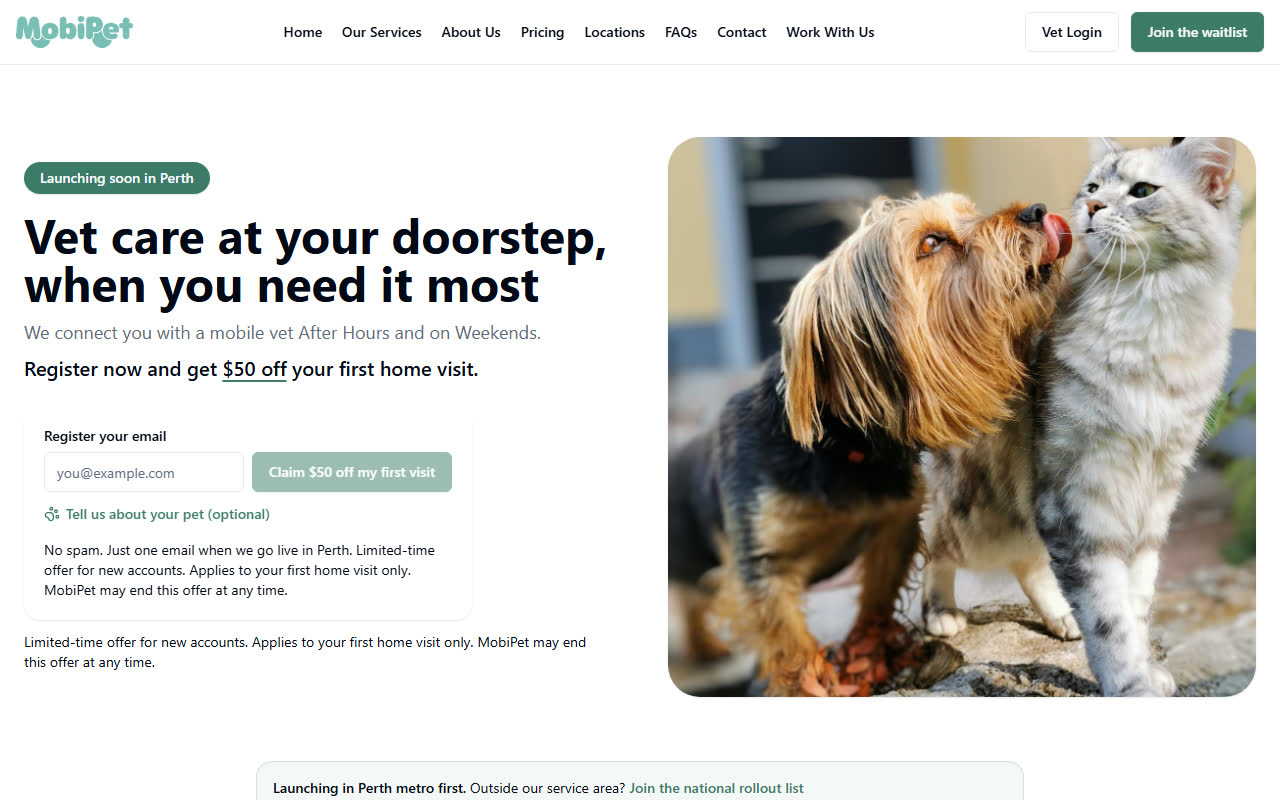
Chapter three has a mobile vet product I was brought in to rescue. It had sat at eighty percent for two years, through two builders and around thirty thousand dollars.
The problem was three hundred small bugs, tangled together. So we kept the thinking, threw the code away and rebuilt on proven parts, the boring reliable ones that thousands of real products already run on. It was solid in weeks.
A small change used to take a month. Now they send twenty seven major changes and they are actioned, tested and released overnight.
The two years of working out how the business should run was the valuable part. The code was the replaceable part.
My analytics business runs support for a lot of Power BI reporting work. We built a tool that scans a report file and writes the documentation and health check a consultant would otherwise write by hand. We called it Nexlytics.
Inside the business it was good. It saved real hours on real work, and we used it every week. It earned its keep the day we shipped it to ourselves.
Then we sold the same tool as a self serve subscription, from about $30 to about $300 a month. Crickets. It still earns close to nothing. Inside my business every client had the problem. Outside it, there was nobody who owned the pain.
That is one build with two uses. The same build can run inside your firm to deliver more, or be sold as software. Inside, your own clients already have the problem. Selling is a second test, and the book shows you can fail it.
Chapter twenty six draws two Tuesdays, two years from now. In the first, the calendar is full of you, and every dollar in the week is tied to an hour you have to be present for. In the second, your judgement got out of your head and into something that runs without you.
You did not get smarter between the two. Same person, same expertise, same twenty years. The book is honest about the second one. It cost more than the first number you carried around in your head, and twice since launch something fell over at three in the morning.
Step one, the repeat work gets automated and you get hours back. Step two, your method becomes a system other people run without you. Step three, that system becomes a product you sell. You work less at each step. By the end you are selling the product and your hours are your own.
The levers I pull are the same every time, whatever the technology. I have pulled them for enterprise operating model design, mobile vets, university benchmarking and countless other deep specialities.
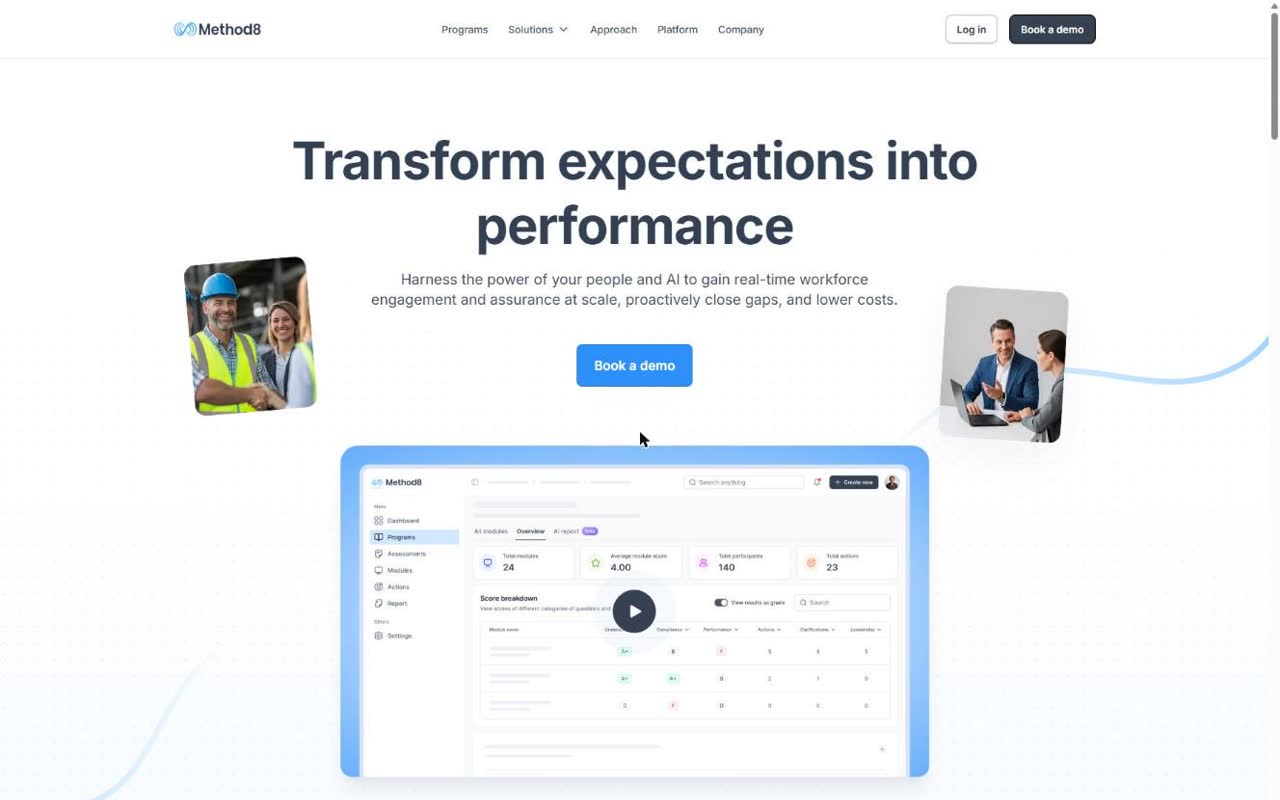
I am the CTO. Method8 takes a niche specialty, operating model and system design, and turns it into software, so the work moves from consulting hours to a product that scales.
It runs inside tier one mining companies. We reached SOC 2 and ISO 27001 in the first 12 months, with an offshore team.
The booking product had sat at eighty percent for two years, through two builders and around thirty thousand dollars. We kept the founder's thinking, threw the code away and rebuilt on proven parts.
It was solid in weeks. A small change used to take a month, and now twenty seven major changes are actioned, tested and released overnight.
We automated the work around our own support diagnosis and left the judgement with the people. The result is an end to end system that handles ninety percent of complex support work.
We also built Nexlytics, a tool that writes the documentation a consultant used to write by hand. It saved real hours inside the firm and sold close to nothing outside it.
Mockingbird is a micro SaaS. It is the method we used on our own campaigns, studying the leading ads and replicating what makes them work, built into a product other people can run.
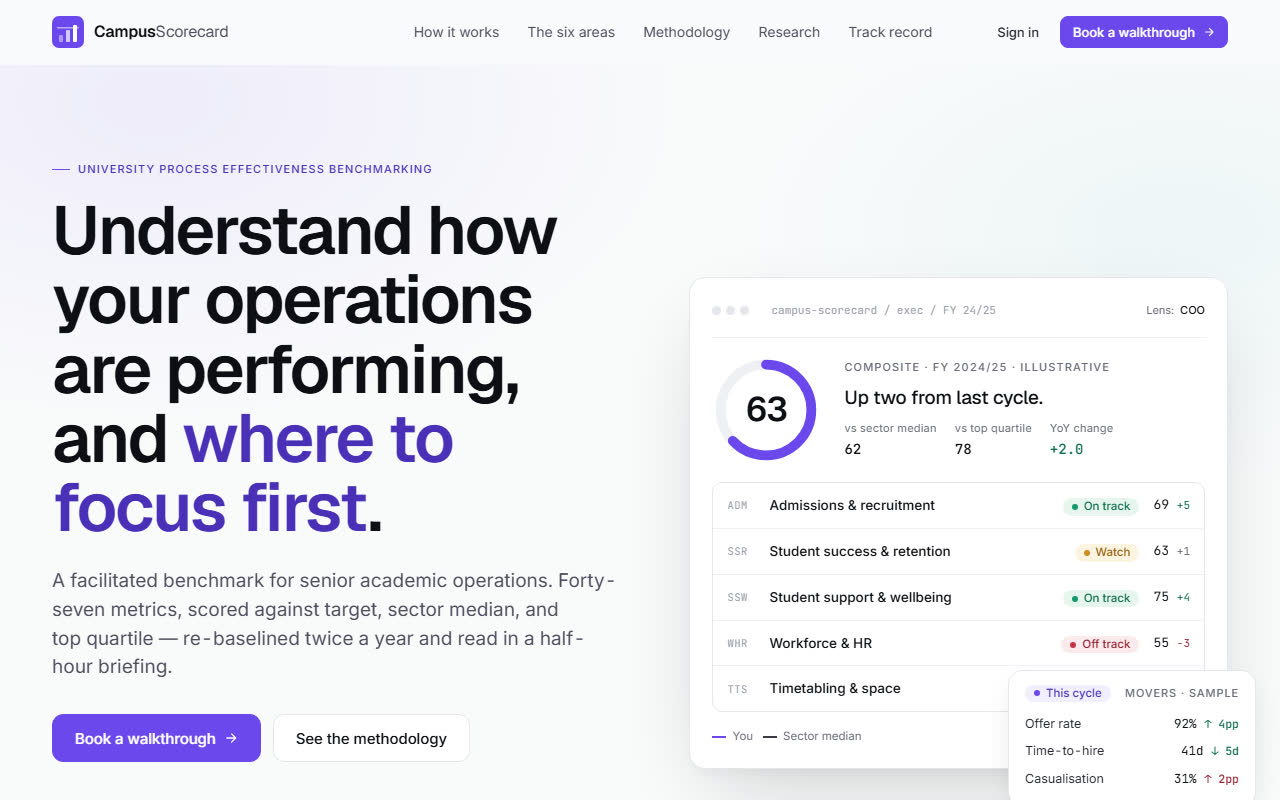
A university operator's knowledge of how services should be measured, built into a scorecard product. A first university pilot started in November.
It is early, and I am not going to dress it up with a number it has not earned.
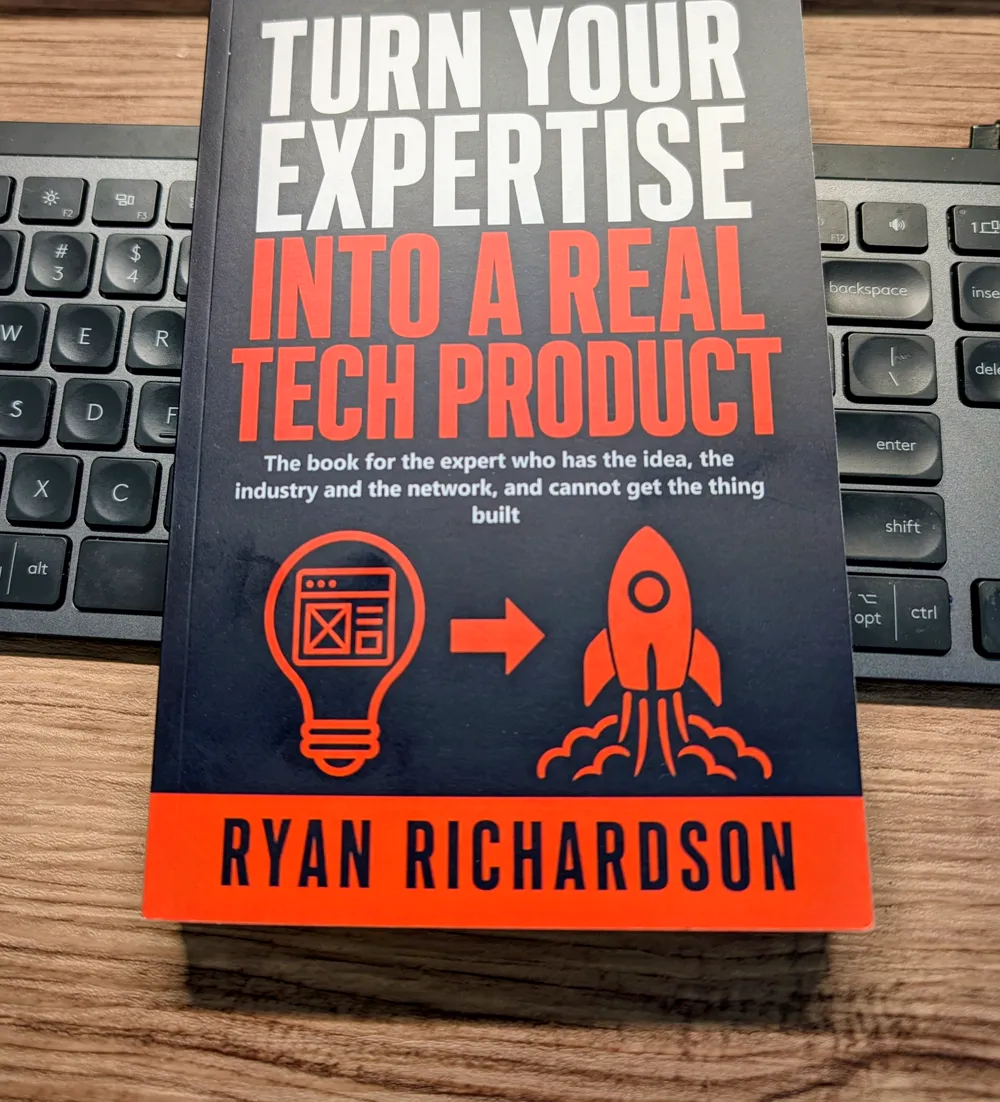
It was written for an expert getting a product built without being the engineer. It is built around the levers that stay the same whatever the technology, so you get the frameworks and the options and can work out what you need. It covers what a build costs, how to read a quote, how to scope the simple version, how to pick builders, how to plan the fail and how to ship. All of that holds whether the product runs inside your firm or is sold.
It is not a book about firms, and it has no chapter on internal systems. The six fixes table and Method First are not in it. They are in The Specialist Ceiling, my 12 page PDF, free with the book. The Capacity Map is not in it either. The book promises no result, and it says this is hard to do. Every number in it is real, or it says the number is an example.
This part is optional, and the book stands on its own. The first step is a two week Capacity Map at $2,500, credited to month one. Then the Partnership at $7,500 a month, three month minimum, then month to month. You choose the step from your Capacity Map. In the first 7 days of the Partnership it runs without your specialist, on a real job, and you sign it off. If it does not, I refund the month in full, including the $2,500 credited from the Capacity Map, and you are free to leave. You own everything built. No equity, no revenue share.
If every job still runs through you, start with the book. It is $5, and you have sixty days to ask for the $5 back.
Ryan Richardson

I'm Ryan Richardson, founder of Sixty Steps.
- A psychology degree, a Master of Commerce in marketing and an MBA, then fifteen years in data and analytics.
- Reporting and analytics inside major mining and resources companies, up to leading analytics.
- Seven businesses and more than a hundred technical projects, from funded startups to tier-one enterprises. Two of the six builds in the book are losses.
- As CTO I have taken three products from concept to paying customers, SOC 2 and ISO 27001 included.
You have an idea you have tested on real people, they want it, and you have no idea how to get it built. You are paying developers or an agency and cannot tell whether you are getting what you paid for. You have been stuck at eighty percent for months. You want to lead the technology side without becoming an engineer.
You are the senior specialist, and the hard work still lands on your desk. You already have paying clients and more work than you can deliver. You work late to cover it, or you cannot find people good enough to hand it to. You have paid for a fix before and want one that gets built.
You are a deeply technical founder who already lives on both sides of the gap. You want a rigid blueprint to follow line by line. You want a course, a coaching upsell or a twelve-week program. This is a $5 book. Your tech is fine and no project is hurting you.
You want a chatbot.
Twenty-eight chapters on the gap between your idea and a product that ships.
Turn Your Expertise Into a Product is 288 pages on how to scope it right, hire and manage the build without being the builder, and ship something real. It is the whole method, not a teaser for a course.
It is written for the expert who has the idea, the industry and the network, and cannot get the thing built. Where a number in it is an example rather than a record, the page says so.
It is in four parts.
The fog, the real reason you are stuck, and why a product, and why you.
Before it, a few pages on what I sell, who the book is for, who I am, how I make my living and how the book was made, so there are no surprises about any of them.
The fifty, the thirty and the ten. What a build costs, and how to read a quote.
Get the idea right, scope the simple version, work with the right people, plan the fail, ship, test and pivot, and where AI changes things.
What it cost me, and how working with me would work if you want that. Chapter twenty seven is the ad, and it says so.
Not a promise. The results in the book are examples from my own projects, not promises. Outcomes vary with your situation and what you do with the material.
Five things you can do that you could not before.
By the last page you will know how this is done, what your first version should look like, and the size of the gap between where you are now and where you could be.
- 1Read a quote.Software stops being a fog. You know the words, and you can tell a fair quote from one built to keep you paying.
- 2Scope the simple version.What your first version should look like, and how to scope it so it ships.
- 3Pick the right people.Who to work with, and the questions to ask a builder before you sign anything.
- 4Plan the fail.The numbers that tell you to stop, written down before you are attached to the thing.
- 5Ship.Ship, test and pivot, with an honest account of what AI changed for someone in your position and what it did not.
Turn Your Expertise Into a Product
288 pages, as an EPUB and a PDF, by email.
Why $5?+
- This is a $5 book. It is not a course, a coaching upsell or a twelve-week program.
- The whole method is in the book, and you do not need to buy anything else to use it.
- If you want the person who wrote the method in the room, the end of the book says how. It is optional, and there is no hidden second half.
Sixty days to ask for the $5 back.
Reply to the receipt email any time in the next 60 days and the $5 comes back. No form, no reason. You keep the files.
Questions people ask first
I am a specialist, not a tech person. Is this book for me?−
Yes. It is written for the expert who is not the engineer. If the method that makes you money lives in your head, or in a few senior heads, you are that expert. Method First is not in the book. It is in The Specialist Ceiling PDF, which comes free with the book.
How do I get The Specialist Ceiling PDF?−
It opens on your order page after you pay, with a button to download it. It is 12 pages and costs nothing on top of the $5.
What format is it?−
An EPUB and a PDF, 288 pages, sent by email the minute you pay. It is also in your Library at portal.sixtysteps.co. Nothing is posted.
Who is it written for?−
The expert who has the idea, the industry and the network, and cannot get the thing built. Either you have not started, or you started, paid for a build and watched it stall at eighty percent.
Do I need to be technical?−
No. The book is written for the expert who is not technical and does not want to be. It gives you a way to think, so you can tell a product being built well from one being built to keep you paying.
Is this a course?−
No. It is a $5 book, not a course, a coaching upsell or a twelve-week program. The whole method is in the book, and you do not need to buy anything else to use it.
Does it promise a result?−
No. The stories in it are real, and the results in it are examples from my own projects, not promises. Outcomes vary with your situation and what you do with the material.
I have already spent money and got stuck. Is it too late?−
Stuck is not the same as too late. Usually the path was wrong. Chapter four is about the real reason you are stuck.
Was AI used to write it?−
Yes. I gave AI my earlier book, my notes and the real builds in the pages, and agents drafted it in my voice while I steered. Where a number is an example rather than a record, the page says so.
Who are you?−
Ryan Richardson, founder of Sixty Steps. A psychology degree, a Master of Commerce in marketing and an MBA, then fifteen years in data and analytics. Seven businesses and more than a hundred technical projects.
Why take advice on building software from an analytics person?−
Because I know how a technical person thinks. I have been one, and I have also been the client writing the cheque, unable to make a technical team understand what mattered.
Have you built products this way?−
Three products, concept to paying customers, SOC 2 and ISO 27001 included. The book also tells the builds that lost, in the same voice as the wins.
How do you make your living, if the book is $5?−
Most of my income comes from data and analytics consulting through my own company. I also take CTO roles with equity, and I get the cover price of this book. That is the whole list, and it is written in the front of the book.
What is the catch? Is there an upsell?−
Three optional add-ons at checkout and a few optional offers after it. If you want me in the room, chapter twenty seven says how. None of it is needed to use the book.
Which add-on should I take?−
Each does one job. The Short Version + Decision Scorecard is the argument with no stories, plus a one-page scorecard for your idea. The Build Kit is for when you have a quote in front of you. The Stack Guide is the list of tools we build on, and the ones we refuse to.
What if it is not what the page said?−
Reply to the receipt email within 60 days and the $5 comes back. No form, no reason. You keep the files.
Three products, concept to live.
Not mock-ups. Live software with customers.
Find out why your idea stalled.
Or don't. Close this tab and the idea stays where it is: in a folder that gets a little less true every year, or at eighty percent, forever almost done. The book is $5, and you have sixty days to ask for it back.